
Semi-suspension in Shibari: balance, constraint and controlled creativity
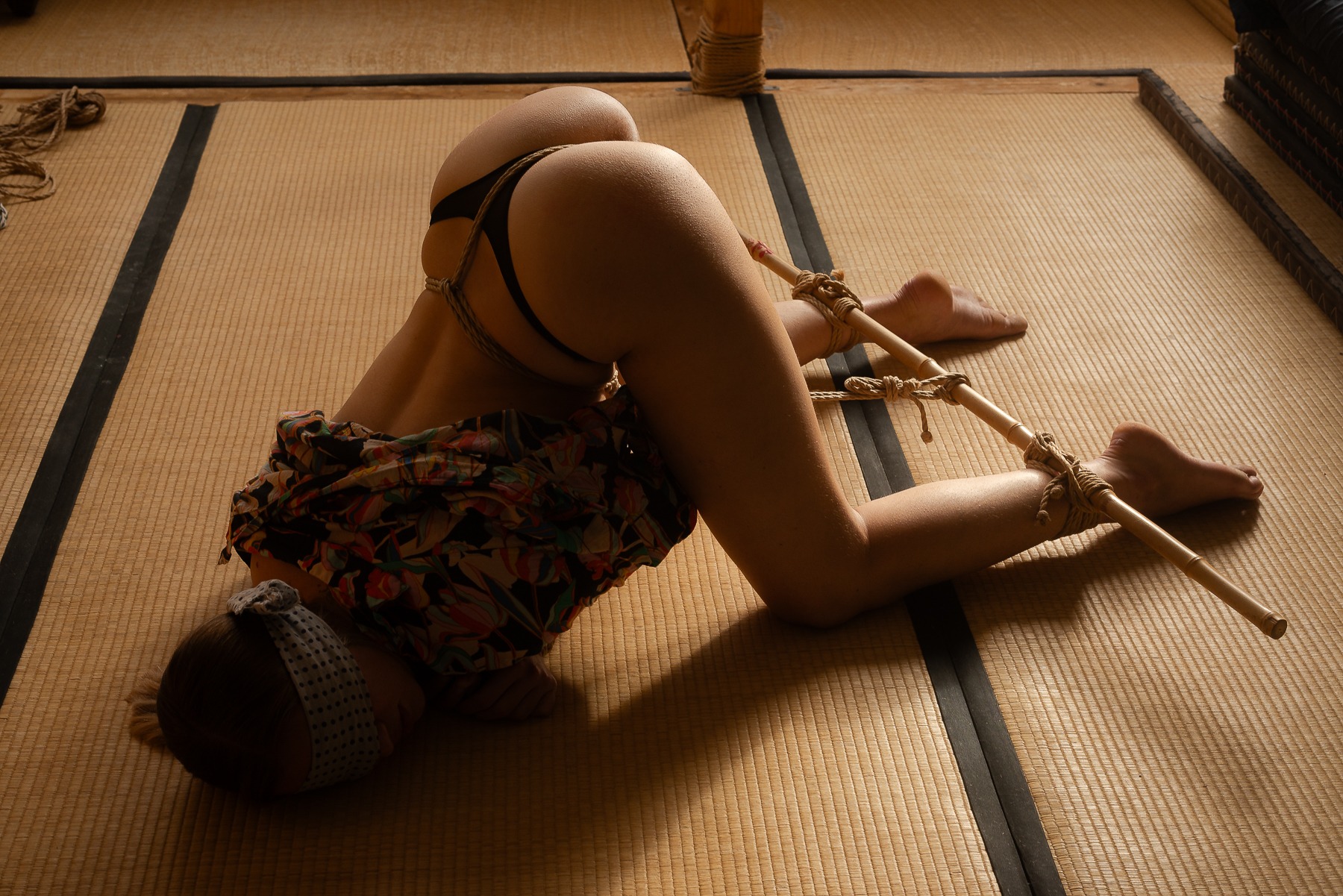
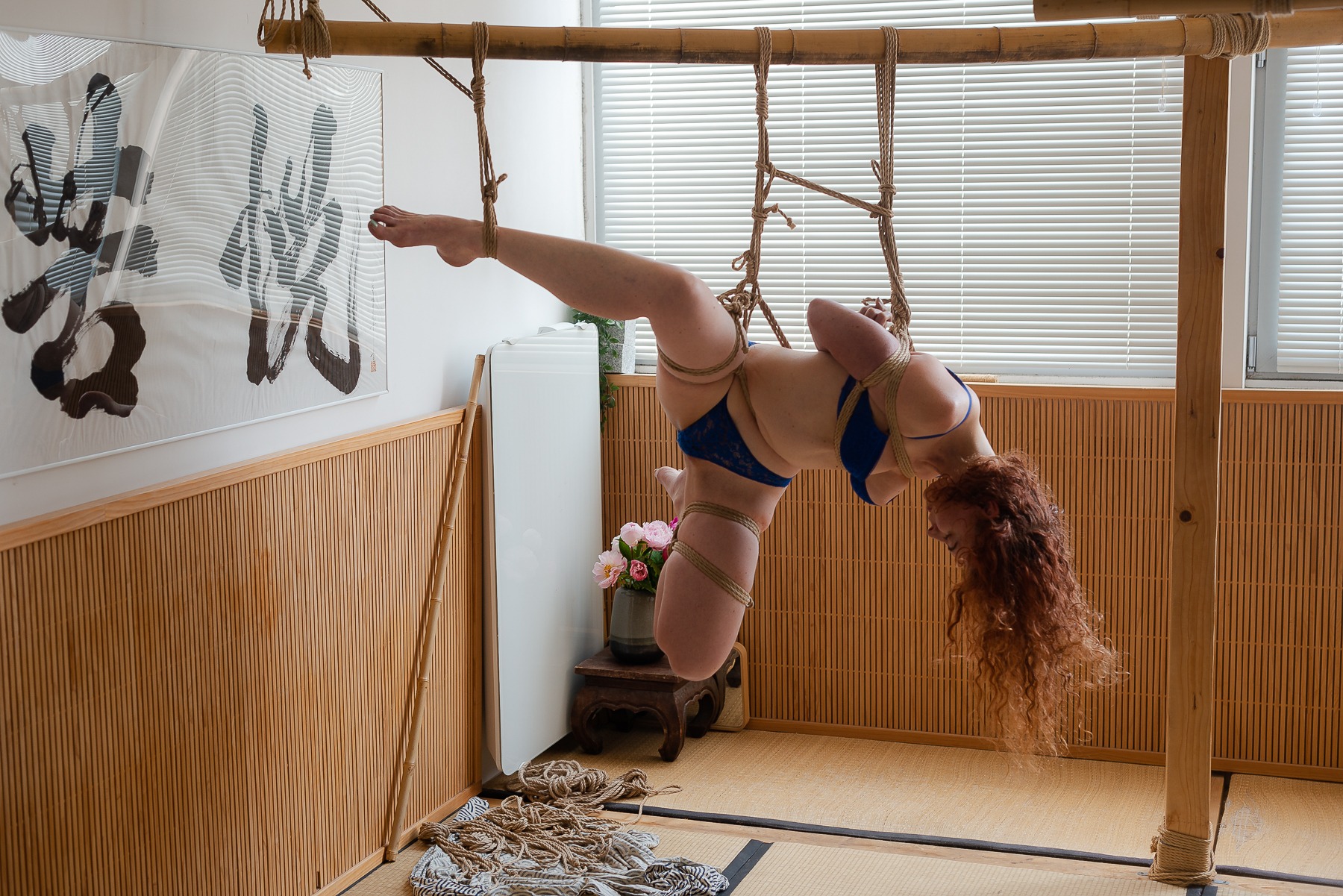
The semi-suspension Shibari holds a special place in our practice. It is one of the forms of play and exploration that we cherish most, both for its technical richness and for the creative freedom it offers.
At the crossroads of floor work and complete suspension, semi-suspension is a demanding, subtle, and often underestimated discipline. At the École des Cordes in Paris, we approach it as a privileged field of exploration, where technical mastery fully serves aesthetics and intention.
Why semi-suspension is a unique practice
Contrary to popular belief, semi-suspension is often more complex to manage than full suspension .
The model is in a state of constant imbalance :
- Part of the weight is suspended
- The other remains in contact with the ground
- The supports are constantly evolving,
- The tension of the strings must be adjusted precisely.
This double constraint — suspension lines + interaction with the ground — requires a fine reading of the body, an anticipation of movements and a great capacity for adaptation.
A strong constraint that enhances the body
In semi-suspension, the body is never fixed. It interacts with gravity, the ground and the ropes in a constant dialogue.
This strong constraint allows the body's shapes to be enhanced :
- Stretched lines,
- Natural asymmetries,
- Visible and legible tensions,
- Organic and vibrant postures.
The semi-suspension reveals a raw and sincere aesthetic, where every micro-adjustment tells a story. It is precisely this visual and sensory richness that makes it one of our favorite practices.
Safety and control of suspension lines
Safety in Shibari semi-suspension relies on a clear understanding of tension lines and their evolution over time.
Contact with the ground creates:
- Unpredictable load variations,
- Areas of compression to monitor,
- Rapid shifts in center of gravity.
Learning to manage these parameters is essential for practicing safely, respecting the body and limits of the model.
A dedicated course to explore and create with confidence
Shibari semi-suspension course is designed to allow you to:
- Mastering suspension lines in a hybrid context,
- Understanding the interactions between ground, strings, and body,
- To improve fluidity and readability,
- Explore your creativity from solid and secure foundations.
We convey a rigorous, accessible and evolving approach, so that each participant can develop their own language, without endangering their partner.
Who is this Shibari semi-suspension course for?
This course is intended for practitioners who already have a solid foundation in Shibari, including:
- Mastering the fundamental connections,
- A good understanding of tensions and counter-tensions,
- Regular ground experience.
Semi-suspension is a key step in refining one's practice, developing sensitivity, and enriching one's technical and artistic vocabulary.
Exploring semi-suspension as a language
More than just a transition to full suspension, semi-suspension Shibari is a language in its own right. It invites you to slow down, observe, feel, and create from constraint.
By joining this course at the School of Ropes, you are choosing a conscious, demanding and deeply creative approach to Shibari.